
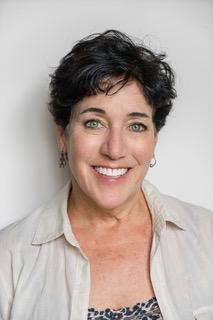
Lisa K. Friedman is an American writer.
Her novel Hello Wife, about a woman who becomes addicted to opioids, was published in 2025.
Lisa has written for The New York Times, Huffington Post, and People, among others.
She teaches creative writing for adults and children, and mentors fiction writers. She enjoys sailing with her dog.
Talking About Books asked her about her novel and the consequences of the opioid crisis.
TAB: Hello Wife is a very personal book for you. What inspired you to write it?
LKF: For years after my sister’s death, my mind was jumbled with questions: how could this have happened? What should I have done? Terrible questions. One day I was sitting at my desk staring at a quote I’d taped to the wall years ago. “How do I know what I think until I see what I say?” My inspiration to write this book is the result. And, it turns out, that this story is not ours alone.
TAB: Why did you choose Charlotte to narrate the book?
LKF: Charlotte’s character came charging into my mind wearing a felt hat covered in Flower Power buttons and a huge smile crevassing her face. She was quirky, funny, irreverent, and vibrating with life. I liked her immediately. But at the time, I sensed her fragility. The combination of her blind optimism and gentle soul made her the perfect vehicle for this story.
TAB: Why was it important to tell a story about opioid addiction and the devastation it causes?
LKF: Losing a sister is awful. Losing a sister to drugs is worse because it is dismissible. Too many people seemed to think that addiction is connected to weakness. Or a personality flaw. Assigning a trait, a reason, to something as terrifying as addiction helps people feel safe. As long as their loved ones don’t exhibit particular flaws or traits, addiction cannot touch them. That is wrong. A cousin, upon hearing of the loss, remarked without thinking: “Well, she never did take care of herself.” As if, had my sister exercised and eaten well, she’d not have fallen into addiction. Also, wrong. It is important to correct what is untrue, unfounded or we’ll never be able to conquer this problem.
After the book was published, I had another shock. People whispered their addiction experiences to me, as if divulging something rancid, something unspeakable. At a formal business function, a stranger whispered into my hair: my son is addicted to pain medication. After an interview, a camera technician approached me in the restroom and offered a shameful admission: my mother was an addict. The shame associated with addiction, the stigma, is devastating. If Hello Wife does anything, it pops the top off this pressurized topic and allows room for honest conversation.
TAB: The opioid crisis has devastated families around the world, but especially in the United States. Do you think the crisis has peaked, or is there still a lot to be done?
LKF: There is no end in sight for the addiction crisis. Technology makes easy the manufacture of new, better, stronger, cheaper products; pinpoint marketing and AI identify vulnerable populations with terrifying accuracy. And yet, we still consider addiction to be someone else’s problem. Someone else’s story. I feel proud of Hello Wife for that reason. Drug use does not skip over good people, good families. The more we talk about addiction and hear each other’s stories, the better equipped we’ll be to change how we function as a society.
TAB: This is your first novel. How did writing a book differ from your other writing?
LKF: I’m a humour writer at heart, and so I headed into this book with a familiar tone in mind. I like to write about trying situations through the lens of humour, and that was my intent with Hello Wife. The characters are funny (most people are, to me), their actions, behaviours, words, are funny. In that way, the book reflects my natural writing style. I wrote the first draft fast. I wrote from morning until night from beginning to end. The story, from that first sentence, was on fire. I just typed as fast as I could until it was over.
TAB: When did you start writing? Is it something you have always done?
LKF: I’ve been writing since I was a child. I wrote out my fears, mostly. I used to tell crazy stories about my family and, more than once, my mother was approached by a teacher or a neighbour to ask about something dramatic I’d told them. She was forever explaining: Lisa has a wild imagination. By the time I was in third grade, she’d found a writing teacher to come to the house and work with me. I think that saved her a lot of embarrassment! I love to write. And I love people who love to read. A perfect match.
TAB: Thank you for the interview and for giving us your insight into addiction.


Pingback: Hello Wife: Lisa K. Friedman – Talking About Books