
Published by SFWP, 2025, 251 pages
“My wedding dress was made by a costume designer I met while buying weed at the 7-Eleven one February, which is also where I met Jimbo, my husband to be. I went to the 7-Eleven every day. I liked standing around the counter, drinking coffee and talking to Plots, the franchise owner. The nicest people come into the 7-Eleven. Real people. People who don’t look down if you’re shopping in your pajamas with no bra underneath.”
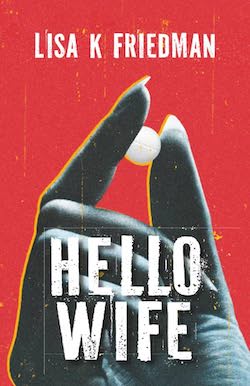
That is our introduction to Charlotte Lansing, a 49-year-old single woman, talented, generous, overweight and lonely. All she wants is to have a husband and a large family. When she meets Jimbo, an opioid addict, she falls in love, and they marry. Jimbo needs her, and she wants to be needed. Jimbo is an adult man who is a child in many ways. He has been living with his mother, who does everything for him.
The trouble with Jimbo is that he comes into Charlotte’s life not just with his neediness, but also with his pills. Pills that he sometimes shares with Charlotte, because he thinks they might “help” her. Soon, Charlotte is sliding into addiction, and it seems that there is nothing her family—her parents and her sister—can do to pull her out of it.
Her family clearly love her, although her mother believes more in tough love, which Charlotte resents. She is close to her sister Celia, who is very different from her. She has made a success of her life with a career, a husband and a child.
Charlotte never wanted to work, even as a child. She does jobs that don’t pay very much, and her parents help out financially when she needs it. She is clearly gifted—she makes delicate crafts, is a great cook and a gardener. And she is generous to a fault. She loves throwing parties because as hostess, she is in her element: it makes her popular, people notice her, and she feels she serves a purpose.
But when Jimbo comes into her life and moves in with her, she lets it all go. The only thing she wants to do is to take care of him. She cannot get over the fact that she is married, and has a husband and mother-in-law! It is what she always wanted. So much so that she calls Jimbo Husband and he calls her Wife.
Charlotte thinks Jimbo understands her and what she needs. So she takes the pills he offers. She is so deeply convinced she has found true happiness—she is getting married to a man she loves after waiting for so long—that she resists any attempts by her family to take her away from Jimbo.
It is clear that Jimbo has developed a tolerance for the drugs—he has a stock of various kinds, which he manages to get through prescriptions. Charlotte does not have a similar tolerance, and she is affected more strongly by the pills she takes. If she does not stop, and if she does not leave Jimbo, she will not be able to survive. The trouble is that Charlotte thinks being Jimbo’s wife will help her survive. She passes out a couple of times and ends up in hospital or in rehab. But instead of the incidents being wake-up calls, she just wants to get home to Jimbo.
We get the story from Charlotte’s perspective. Lisa K. Friedman captures her voice while leaving enough unsaid for the reader to be able to see the bigger picture. Charlotte remembers her school days, when she had to deal with the cruelties that children inflict and that can scar you for life. But you also see her as a caring, sensitive child, curious about the world.
Her vulnerabilities make her a perfect target for someone like Jimbo. We only see him through Charlotte’s eyes: she believes he loves her in his own way, but he does expect her to do all the housework and be there for him when he needs her, to the exclusion of everything else. There are hints in the narrative, though, that point to the fact that she does realize what is happening. Will she be able to survive?
It is a heart-breaking story. Like her family, the reader watches helplessly while Charlotte makes one bad decision after another. Friedman, through Charlotte’s narrative, shows how her family try to help, doing everything they can, but she is deaf to their advice. I cannot imagine what that must be like.
This is not just a story about addiction, but also about family ties, especially the bond between two sisters. Celia is the one person who can get through to her—up to a point—and takes care of her. You can feel the anguish of the parents through Charlotte’s narrative (although she herself seems to ignore it).
What makes this even more heart-breaking is that Friedman wrote it after losing her sister to opioids. Which explains why the story feels so real. The book tries to answer the question, how could this have happened? Using first-person narrative helps to see how someone who is not an addict can become one, how insidious the slide into addiction can be, and how unaware the person is that they are becoming dependent on drugs.
According to the Centres for Disease Control and Prevention (CDC), the opioid crisis in the US alone has claimed the lives of 806,000 people from 1999 to 2023. Like all addictions, it affects not only the person on drugs but the people around them. If you add to that all the families and loved ones affected, the number goes up exponentially.
This book, by focusing on just one family, takes the story beyond statistics, showing the toll that the opioid crisis has taken and the lives it has destroyed.
Read the Talking About Books interview with Lisa K. Friedman.


This sounds so real as far as neediness and addiction goes Suroor.“ A word after a word, after a word is power”
Yes, it felt very real. I think more so because she wrote it after losing her sister to opioids.
Pingback: Shining a Light on Addiction: An Interview with Lisa K. Friedman – Talking About Books