
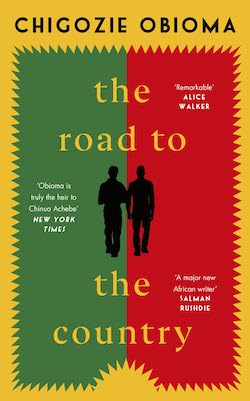
Published by Hutchinson Heinemann / Penguin, 2024, 358 pages
“The story of a war can only be fully and truly told by both the living and the dead.”
—Igbo proverb
Kunle is nine years old when he sends Tunde, his younger brother, out of the house, so that he can be alone with Nkechi. Tunde runs out into the street and is hit by a car. The accident puts him in a wheelchair for the rest of his life.
This incident marks both brothers, especially Kunle, who feels responsible for his brother’s accident.
In 1967, Nigeria faces civil war. The Igbo rebel against a pogrom carried out by the Nigerian government and declare the Biafra Republic. The Nigerian government responds by sending in the army.
Meanwhile, Kunle—a young man now—is so absorbed by his studies that the news of the war passes him by. But that changes when he finds out that Tunde is in Biafra with Nkechi, who is Igbo. Worried that his brother will be killed, Kunle takes it on himself to find Tunde and bring him back. He feels it is the least he can do for his parents and his brother.
He signs up with the Red Cross, which is taking supplies to Biafra, and is captured by the Biafran army. Instead of being shot, Kunle is asked to join the fight: although his father is Yoruba, his mother is Igbo. He agrees—he doesn’t really have a choice. Although he tries to look for ways of getting back, he finds himself caught up in the Biafran cause.
The war changes him—as it always does—and he becomes close to some of the soldiers: Bube-Orji, Felix and Ekpeyong. And when Kunle meets Agnes, who has joined the army after her entire family was killed, he also finds love.
This is a book that immerses you in the Biafran War. The Biafrans fight hard, even though they are vastly outnumbered. They are helped by white mercenaries. One of them, Rolf Steiner, creates a small elite unit—one that includes Kunle and his companions—whose aim is to wage guerrilla warfare against the Nigerian army.
There is a mystical element to the book. The story is narrated by a Seer, a man with special powers to see into the future. He is fascinated by the story of the “unborn man” (Kunle has not been born yet), because he is an abami eda, a man who will die and return to life. Which is what does happen: Kunle is badly injured in a battle and presumed dead, but Agnes refuses to give up on him and brings him back from the battlefield. While he is in a coma, Kunle visits the world beyond this one and meets with the dead. But he does return, nursed back to life by Agnes.
The story takes the reader through to the end of the war, a war that left large numbers of people dead, including through famine and ethnic cleansing (estimates vary from 500,000 to 3,000,000).[1] It was devastating.
“Only a few weeks ago, a country was one and these people were neighbours. Today, they are killing each other, and even among the same family, brother is fighting against brother. And the world, like an injured bug, lies on its back, unable to turn itself over again.”
This is the story, not just of the war, but of Kunle, a young, bookish man who becomes a soldier. Kunle is not like the other soldiers—he is only part Igbo, and although he believes in the cause and puts his life on the line, he is torn between his family, the war, and Agnes. His guilt for his brother’s accident takes him into the midst of the conflict and will be the one thing that might just get him out.
Chigozie Obioma writes perceptively about human relationships—I also found this in his earlier book, The Fishermen—and here he brings his talent to bear on war and what it does to people. Kunle becomes close to a small group of men in the Biafran army, and he forms a bond with them, the kind of bond you form with someone with whom you face life and death. The men hide nothing from each other, sharing the intimate details of their lives.
“First, they do it to check their own disintegrating minds against the stability of the others’, to be sure they are not the only ones falling apart. Second, perhaps the men question the point of keeping secrets when tomorrow, or even tonight, they could be dead.”
This is a harrowing, moving book that will stay with you.
[1] Encyclopedia Brittanica, “Nigerian Civil War”, https://www.britannica.com/topic/Nigerian-civil-war#ref355917.
Read the Talking About Books interview with Chigozie Obioma.
Read my review of Chigozie Obioma’s The Fishermen.
See also Half of a Yellow Sun by Chimamanda Ngozi Adichie, also about the Biafra War.


Pingback: The Fishermen: Chigozie Obioma – Talking About Books
Pingback: Half of a Yellow Sun: Chimamanda Ngozi Adichie – Talking About Books
Excellent review Suroor as i have this book
His other book, The Fishermen, is also excellent. I haven’t read An Orchestra of Minorities.
If you enjoyed these two, I’m sure you will also enjoy Orchestra. (I reviewed this one here, if you’re curious to read more.) I still think back to a couple of scenes in this novel, some time later.
Nice review! I like the idea of Kunle being more than one self. Will look out for Orchestra.
Pingback: Drawing on Nigerian History and Folklore: An Interview with Chigozie Obioma – Talking About Books