
Translated from Dutch by Lucy Scott
Published by Tilted Axis Press, 2023, 230 pages. Original version published in 1982.
“I’m Noenka, which means Never Again. Born of two polar opposites, a woman and a man who pull even my dreams apart. I’m a woman, even though I don’t know where being female begins and where it ends, and in the eyes of everyone else, I’m black, and I’m still waiting to discover what that means.”
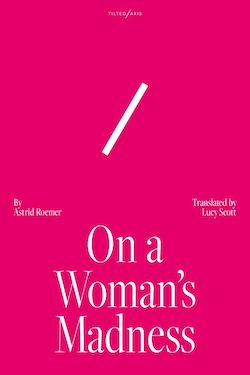
This novel from a Surinamese writer is the story of Noenka, a woman who tries to live on her own terms.
Noenka, a teacher, leaves her husband Louis after nine days of marriage. When the headmaster finds out that she has left her husband, he gives her an ultimatum: either she goes back to him or loses her job. So Noenka decides to move to Paramaribo, away from Louis and everyone else.
She finds work as a teacher and reconnects with an old love, Ramses, who grows orchids. The two of them start to live together. Ramses is sensitive and intense, with a great love of orchids—flowers that, he tells Noenka, have “overcome the greatest catastrophes to become unobtainable for mankind. Solitary plants. Flowers that are only for people who truly love them.”
But society has not done with her yet. Word about her and Ramses living together gets around, and the school inspector suggests that she find herself a more respectable accommodation. He gives her two addresses of homes where she could stay as a lodger. Noenka moves in with one of the families: Gabrielle and Evert, a couple with two handicapped children. Gabrielle is unhappy and drinks to escape.
Noenka breaks up with Ramses, who is heartbroken and dies. His death is followed by that of Noenka’s beloved mother. She is devastated by the loss of these two people, who meant so much to her.
Through it all, Gabrielle is there for her. The two women become close and fall in love. But they are both married, and Gabrielle is financially dependent on her husband. There is no safe space in society for women who choose to turn their backs on marriage.
Meanwhile, Louis is determined to get Noenka back. After her mother’s death, they move in with her father, but that doesn’t really work. He takes her to a doctor—a man—who decrees that she should go back to her husband and “behave like a normal woman”. Noenka is diagnosed with mental disorder (the label of madness has always been a convenient way to deal with difficult women) and he gives her pills, which she does not take.
Eventually things come to a head, and Noenka and Gabrielle have to pay the price for their love.
On A Woman’s Madness is a powerful book, beautifully translated by Lucy Scott. The writing is raw and sometimes lyrical. Ramses tells Noenka, “You know what, Noenka, when I see you again, it’s exactly like I’m falling to pieces. It’s like it’s raining somewhere. Like old things dying, time making a detour, like I’m breathing in a new orchid.” After her mother’s death, Noenka feels that the “days distressed me like unwanted guests”.
The most tender moments in the book are between Noenka and the two women in her life: her mother and Gabrielle. When Gabrielle comes to Noenka, who is reeling from tragedy of the death of Ramses and her mother, it is as if someone has thrown Noenka a lifeline. “Then she turns and sinks into my eyes. A shudder ripples down my spine. I grow heavy. Warm. Alive. I’ve landed. Everything that was closed opens up.”
The scene where her mother cleanses her with water, when Noenka stands naked before her for the first time as an adult is beautifully described.
Written like an outpouring from Noenka, the novel moves back and forth in time. It is not an easy read, and sometimes feels quite fragmented. But the first-person narrative means that you get inside Noenka’s head. She is angry, unhappy and insecure—and at the same time, magnificently alive.
This is a scathing novel about how women are shackled by society’s expectations of who they should be, how they are made to feel powerless if they choose to go against these expectations, and how they have to fight for the right to live—and love—as they choose.


This sounds very powerful. I like the parts you’ve quoted, and they would have been even more shattering in 1982.
It is a queer classic, and a book, which as you say, must have hit even harder in 82.