
Published by Faber & Faber, 2012, 116 pages
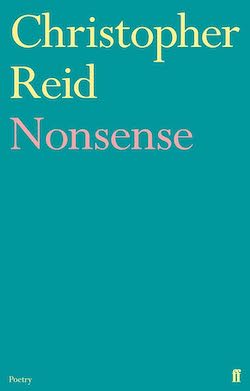
This book of poems is a quartet, with the first three poems narrating stories, and the last a collection of poems about everyday life that spans a day.
The first—and the longest—poem is Professor Winterthorn’s Journey, about a widowed academic who gets himself an invitation to a conference that he will not be speaking at. He sees this a way of getting back into the world after his wife’s death. Christopher’s Reid writes about the minutiae of travelling, something that will resonate with anyone who has been through this process: the packing, the suitcase on wheels, the cab ride, a quick trip to the airport bookshop, check-in, flight, and hotel at the other end.
However, this is not a description of travelling: it is about a man dealing with a great loss. Maybe, he thinks, the conference—where he will meet his peers, and maybe a couple of ex-lovers—will help him reconnect with the world.
The poem reads like a short story in verse. This is a vivid portrait of a man dealing with grief and guilt. Professor Winterthorn is separated by the life around him by the pain within him—something he tries to cover by some sort of normality, but that is never far away.
“Absence within absence,
Parenthesis
within parenthesis
within parenthesis.
And at the heart:
nothing. Empty brackets.
A drear vacuum
that howls like hell.”
The next poem, The Suit of Mistress Quickly, is set during the rehearsal of Henry VI Part II. It is a stream of consciousness in third person from the actress playing Mistress Quickly. She is having trouble finding her voice, and the director, Dudley, is getting impatient. Falstaff is played by Sir Geoffrey, clearly a well-known, older actor, who has a strong sense of his own importance.
The actress narrating has a wicked sense of humour and a sharp tongue which makes the poem thoroughly enjoyable. Dudley calls for silence, and “Then a violent throat-clear from you-know-who / that echoes in this once-sacred place / like the cough of God.”
Airs and Ditties of No Man’s Land is series of conversations between a captain and a sergeant who have died on no man’s land during the First World War and are now mere skeletons. “…we let the wind / rummage in the hollows of our skulls / for memories and scraps of songs and wisps of rhyme”.
Airs and Ditties of No Man’s Land are a mix of blank verse and rhyme and were set to music by Colin Matthews. They are a searing indictment of the brutality and futility of war, and the loss and pain it causes.
The last section, A Salute to the Moonlight, consists of poems that take us through a day—from 5:30 in the morning, when the narrator glimpses the moon, to late at night when an insomniac poet awakens and frets about a negative review of his work. These are poems about everyday life: people going into work, the much-needed cup of coffee, a mother taking her baby for a stroll, trucks weaving in and out of traffic…
I love the way Reid writes, the way he captures a moment or a feeling. For example, this piece about a tortoise, with the way the lines are laid out echoing its movement:
“where a tortoise tilts and bumps itself down
some concrete steps
like removal men managing
a large, odd,
dusty, but once-loved
item of farmhouse heirloom furniture”.
These are the first poems by Reid that I have read, and he really is a poet worth discovering.
 Talking About Books