
Translated from Assamese by Mitra Phukan
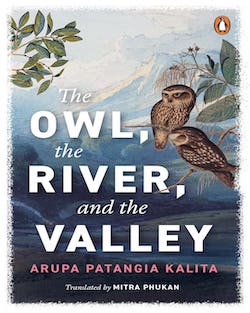
Published by Penguin, 2025, 338 pages. Stories in the original version published over several years.
“Certainly, their parents must have given these women a name. Those names were lost in the river of time. What indeed did they have that would allow them to hold their names firmly in their grasp? After extracting as much domestic toil from them, these girls were then sent off to the custody of some random person. The illusory bonds of a few children, the torture from husbands, and till the last journey on to the funeral pyre, this was all a familiar struggle. And through all this, was it possible to recollect their own names, their own identities? An unlikely thing.”
A woman does all that is necessary to make sure her daughter is educated; the Indian mistress of an English tea plantation owner has to learn to live without his support when he dies; a bookworm has to give up her books and identity when she marries; and a beautiful woman finds it hard to reconcile her life with what she had expected.
This is a collection of a dozen stories by Assamese writer Arupa Patangia Kalita focusing on women. Women who struggle to make something of their lives but are stymied by society and by the fact that they have very little agency.
In Rajmao: The Queen Mother, Komola is married off to Pobon Das, a tree cutter. Initially, the marriage seems to work well, but Pobon starts drinking and then has an accident that leaves him incapacitated. They have a daughter Purobi, and from now Komola is referred to only as Purobi’s mother. She is determined that Purobi will go to university, and now that Pobon cannot work, it will be up to her to make it happen. She moves to Delhi to work as a maid for a wealthy couple. She sends money home regularly, and then the money and the letters stop. A few months later, she returns to the village, well dressed and affluent. She was paid handsomely by the childless couple to be a surrogate and had been sent to the hills to have the child, a child she never saw.
In The Yellow Flip Flops, the poor relative of a well-to-do family ends up becoming the maid in a wedding—the woman who does the cooking, tidying up, bringing tea for her relatives. Her one consolation are the beautiful yellow flip-flops she brought with her from her village. When they go missing, she is distraught. Her relatives find her desperation funny, but while for them, flip-flops cost nothing, for her, they mean a lot.
In By the Clock, a lawyer marries Xonpahi, a young girl who loves to read. But once she is his wife, her life is run by her husband’s grandfather clock. Her husband must have his meals on time. Since his mother, who had supervised this routine, is sick, it is up to Xonpahi to take charge. He must have lukewarm lemon and honey at 4 in the morning, followed by black tea at 6. And so on, until her time is completely taken up with catering to her husband. There is no place for her books or her own identity.
Many of these stories are heart-rending: women who are subsumed in their domestic lives until practically all traces of the real woman disappear; mothers’ dreams for their children shattered by poverty; and the toll taken by the struggle of everyday life. But there are some stories that do not end badly, like Ausie or Hausi, where the mistress and her maid find a closeness in each other as old women.
I am happy to see more books translated from India’s regional languages—there is a rich store of literature in India that the rest of the world now has access to.
This collection is one of those finds that has crossed the language barrier.
 Talking About Books