
Translated from Portuguese by Bruna Dantas Lobato
Published by Charco Press, 2024, 202 pages. Original version published in 2020.
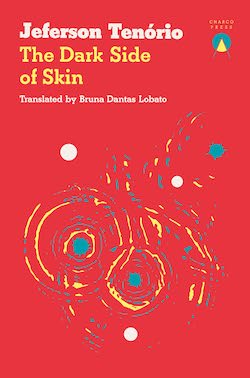
“Sometimes you’d have a thought and go to live inside it. Push everyone away. Build a house that way. Somewhere far. Deep inside yourself. That was how you dealt with things. These days, I choose to think you left so you could come back to me. I didn’t want your absence to be your only legacy.”
Pedro tries to make sense of his father’s life and death as a way of putting his own into perspective. With the objects left by his father, Pedro tells the story of his parents, Henrique and Martha. The book is addressed to his father, the “you” in the narrative.
Henrique was a schoolteacher in Porto Alegre, Brazil. It was not a job he enjoyed anymore—the students did not really want to learn, and he felt he was wasting his time.
But this is not just a story about an unhappy schoolteacher: it is about racism and how people’s lives are affected by the colour of their skin. It was Senhor Oliveira, a literature teacher, who opened Henrique’s eyes to race. Until then, he had thought he and his white girlfriend Juliana held shared opinions. Her family had accepted him, but would call him their negão. They did not think anything of remarks like that; to them these were just jokes that were brushed off as a bit of fun.
Henrique had become used to the insidious racism—it dictated how he lived. Blacks, especially men, had to learn to live by erasing themselves, by behaving in such a way that white people did not notice them. “Don’t talk too loudly in certain places; people get scared when a black man talks loudly. Don’t walk behind a white person on the street for too long. Don’t make any kind of sudden movements when a police officer approaches you.” And so on, a seemingly endless list of do’s and don’ts.
Martha had been through her own trials. When she was 10, her mother was hit by a car and killed when she was walking down a street drunk, and her father died soon after. Martha and her three younger brothers moved in with their aunt but her aunt had trouble supporting them, and Martha was adopted by her aunt’s friend, Madalena. Martha tried to leave Porto Alegre, a city that reminded her of her parents. She married but the marriage did not last, so she left and returned to Madalena, the last thing she wanted to do.
Henrique and Martha fall in love, but it is a difficult relationship. Martha is jealous and demands that he give up everyone else for her. And he goes along with this, and the two of them “become an island”. “You had easily accepted that love wasn’t about wanting the other person to be happy, but wanting them to erase themselves for you, to sacrifice themselves for you.” So Henrique’s erasure is two-fold—both as a black man and as a husband.
By the time they have Pedro, the marriage is beginning to fray, and they think that having a baby might keep the marriage alive. But it doesn’t work, and Henrique leaves before Pedro is a year old.
The Dark Side of Skin is about racism and the breakdown of public institutions—the picture Jeferson Tenório paints of schools is pretty grim. Henrique finally finds a way of connecting with the students in the adult education classes he teaches, but he does not live long enough to see it through. The novel reflects the weight of family history on the children, a weight that they carry with them for the rest of their lives.
This is a powerful book that goes straight to the core of Brazil’s racism. It is also a book full of the tenderness of a son’s love for his father, an attempt to understand his father’s life and legacy.
Pedro puts together this narrative about his absent father, a story he calls “an open wound”. “It’s a story to heal me of the absence of what you stopped being.”
 Talking About Books
Pingback: Best Books of 2025 – Talking About Books