
Published by Penguin, 2023, 326 pages.
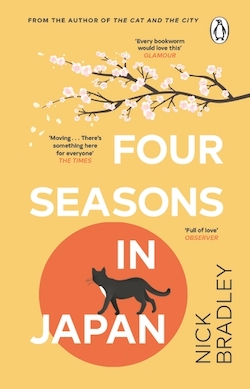
Flo is an American translator working in Tokyo. She is unhappy—her partner Yuki is planning to leave for the US, and Flo cannot bring herself to leave Tokyo and join her. She has not told her two friends, Kyoko and Makoto, anything about Yuki and does not confide in them when they ask her why she does not seem herself. Flo’s reaction to any kind of emotional upset is to lock people out.
One day in the metro, Flo finds a Japanese book called Sound of Water by Hibiki, a book that someone left behind. She takes it home and reads it. The book has a profound effect on her, and she decides to translate it.
The book is about Ayako, a woman living in Onomichi, a small town, and her grandson Kyo, who is sent from Tokyo to live with her. Kenji—Kyo’s father and Ayako’s son—was a war photographer who had committed suicide, leaving behind his wife and young child. Kyo has failed his school exams and has to resit them, and his mother thinks he is more likely to focus on his studies away from Tokyo.
Kyo is not happy about this and resents having to move to the countryside. Ayako is a strong character with secrets of her own, and the two find it hard to connect. But they have both been through a horrendous personal tragedy—the death of Kenji—and over time, they start to build a relationship that becomes important to both of them.
Meanwhile, Flo has started to translate the book without contacting the author to get his permission. Flo’s editor is interested, but they cannot publish the translation unless Hibiki agrees. He is hard to find—for one, she only has a single name for him. But as she starts to learn more about him, she discovers similarities between his life and the story of the book. She finds she can no longer retreat into herself and the pages of the book she is translating, but has to step outside her comfort zone if she wants Sound of Water to find a larger audience.
Four Seasons in Japan moves between Flo’s life in Tokyo and the story of Sound of Water, and is divided into four seasons. There are parallels between the two stories: Kyo sees himself as a failure for not having passed his exams—he feels he has let his mother down. Flo feels the same way. She had insisted on translating Yuki’s novel but could not find a publisher for it. She blames herself and feels that she has let Yuki down, although Yuki seems to have moved on. And then there are the cats: Coltrane, the stray cat that Ayako feeds and who becomes part of her family, and Lily, Flo and Yuki’s cat. The two stories meet when the trail to Hibiki leads Flo to Onimichi.
This is an enjoyable and easy read.
Nick Bradley writes vividly about Japan, especially about rural Japan in the book within the book. I loved the part about Ayako and Kyo. I cared about the characters in this section and was completely engaged. Flo, to be honest, got on my nerves—when it was her turn, I just wanted to get back to Ayako and Kyo. I can see why Flo is necessary to the plot, though—this is a book about the importance of sharing the stories of our lives, about reaching out to people. And about the power of books and their ability to change lives.
 Talking About Books