
Translated from Spanish by Isabel Adey
Published by Charco Press, 2023, 157 pages. Original version published in 2020.
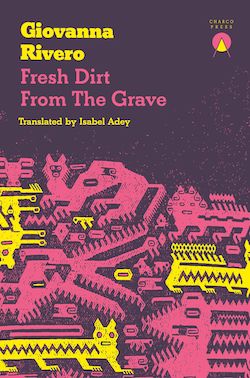
A mad aunt threatens to reveal a family secret; a Japanese woman forms a bond with her quiet lodger; and two orphans are taken in by their alcoholic aunt.
These short stories by a Bolivian writer are a mix of the dark and the light, stories about people trying to retain their humanity in difficult circumstances.
The narrator of “Socorro” takes her husband and twin sons to visit her mother and her aunt, who live together. This is a trip taken more from a sense of duty than pleasure. Her aunt, Socorro, is a little mad. The narrator is a clinical psychologist but finds it hard to sympathize with her. Throughout the visit, Socorro keeps referring to an explosive secret, a secret that could destroy the family.
In “Fish, Turtle, Vulture”, Amador visits the mother of Coronado, a boy who had died on Amador’s boat. They were adrift when Coronado died, and Amador sailed with his corpse for a few days before dumping it overboard. The mother is not satisfied with Amador’s story. She wants to know every single thing, even the unthinkable. Amador is reluctant to tell her the whole story, but she is determined to find out. Amador seems to have a constant hunger, a result of his days starving on the boat, a hunger that Coronado’s mother uses to keep him talking.
In “Donkey Skin”, Nadine Ayotchow tells her story to the gospel choir that she has joined. Her parents had died in a car accident in Bolivia when she was a child, and she and her brother Dani were sent to live with their aunt in Canada. “Aunt Anita…when the time came to appear at the juvenile court, despite all those breath mints she slotted between her teeth, still couldn’t disguise the stench of whiskey.” They live in what their aunt calls a “historical gem”, but is in reality a house falling apart. When Dani eventually decides to run away, an unexpected event impacts both children’s lives.
In “It Looks Human When It Rains”, Keiko, who teaches origami in a women’s prison, takes in a lodger, Emma, a young girl who never speaks. Keiko’s daughter Hiromi is suspicious of the girl: when she turns up at Keiko’s door, Keiko simply takes her in without asking for an ID or employment references. Keiko feels more comfortable with Emma than she does with Hiromi. But there is a reason for that, one that we discover at the end of the story.
Giovanna Rivero pulls you into the world of her stories, beautifully translated by Isabel Adey. Her descriptions of people and places are vivid, and you go on a journey with them. Socorro is larger than life, and embittered. The aunt sings to one of the narrator’s twins, “choosing, in the Russian roulette of her battered psyche, a potential object for her affections”. Her “voice is so off-key that it seemed to wallow in its chaos…Then, once again, the burst of laughter that destroyed the world. Any possible world.” Nadine and Dani arrive in Canada in January, bewildered, grief-stricken, to the prairies “beneath the soft sob of the snowflakes”. A prison inmate at Keiko’s origami workshop makes a snake out of a sheet of purple paper: “the most dangerous, most animated reptile in the workshop. … It was a triumph of perseverance, mental focus and dexterity over mediocrity and the haste of the fleeting, of all that dies before taking a breath.” But when she looks into the woman’s eyes, expecting to see “a profound, indecipherable sadness”, she sees “a sinister, accusatory light instead”.
These stories are not a light read: Rivero does not look away from the darker side of life. However, the brutality does not take away from the humanity and tenderness of the people she writes about. It is the mix of these two qualities that makes her stories memorable.
 Talking About Books
Pingback: The Best Books of 2024 – Talking About Books