
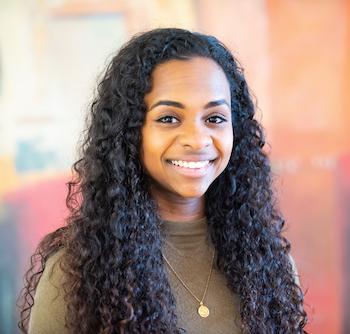
Hafsa Zayyan is a Nigerian-Pakistani author and a dispute resolution lawyer working in the City of London.
Her book We Are All Birds of Uganda won the MerkyBooks inaugural New Writer’s Prize. She has contributed to Of This Our Country, essays that explore writers’ relationships with Nigeria; and Will You Read This Please?, short stories on mental health based on real experiences.
Talking About Books asked Hafsa about her novel, the sense of home and belonging, and racism.
TAB: We Are All Birds of Uganda is about an Indian-Ugandan family. Why did you choose this story to tell?
HZ: My husband is of South Asian Ugandan descent but when I met him I had no idea that this part of British history had existed—even as a person of South Asian descent myself, with an interest in our histories. More than 25,000 South Asian Ugandans settled in the UK after Idi Amin forcibly expelled them from Uganda in 1972, adding to the existing South Asian East African population that were already living in England. The history informs and explains so much of the present—it’s vital to our understanding of today’s Britain. Stormzy’s imprint of Penguin Random House was seeking submissions for a prize on the topic of telling stories that aren’t being told, and it was the perfect fit.
TAB: Tell us about your family background. Do you draw on some of your own experiences for the book?
HZ: I was certainly drawn to write about the history because my in-laws are South Asian Ugandan. But a lot of the themes—duty, migration, identity, racism and anti-blackness in South Asian communities, success—are familiar to me personally. I am half-African half-South Asian, and while the story is entirely fictional, I’ve experienced first-hand many of the incidents described in the book—things that have either happened to me directly or I’ve seen happen to people in the communities I come from.
TAB: One of the book’s themes is the sense of belonging, especially as all three generations of Hasan’s family are migrants. Their sense of home feels fragile. Is this something you believe is common to the migrant experience?
HZ: Yes and no. The migrant experience is not homogeneous but I do think that a sort of preoccupation with the concept of home tends to feature in a migrant’s life—whether or not it feels fragile. That seems a sort of inevitability if you’ve been uprooted or had uprooting in your near family history. For me, as a child of immigrant parents, with a migratory upbringing, I was never really able to call any one place home. That didn’t mean it felt fragile though because I learned quickly to redefine my understanding of what the term meant. I’ve always found home—a sense of belonging, of being comfortable, at ease, somewhere to come back to at the end of the day—in the people I’m with rather than a place I’m at.
TAB: You explore racism in We Are All Birds of Uganda, racism not only on the part of whites but others as well. Could you say more about this?
HZ: Anti-blackness in the South Asian community is something I’ve experienced my whole life and it was something I wanted to draw attention to specifically because of it. It’s not something that’s talked about often, if at all, and the history of the British and South Asian presence in East Africa is a particularly interesting one to explore in that context. The British encouraged and imposed a clear social, economic and even physical hierarchy with Europeans at the top, then South Asians and then the native local population at the bottom.
TAB: Do you plan your story before writing or do the characters surprise you by taking you in a different direction?
HZ: A bit of both. I’m a very plot-driven writer, and I need a good plot most of the time to get me through reading as well, so I like to plot out the general direction of travel, as detailed as possible: I know what’s going to happen broadly in each chapter. Then I start writing, and yes, the story develops—it moulds and I adapt to meet the new contours set by my characters and their wishes, without letting them stray too far! The reality is that as you start writing, you start noticing things sound better, feel better etc., if the plot flows a slightly different way to your original, unleashed skeleton.
TAB: You are also a dispute resolution lawyer. How do you balance a full-time job with your writing?
HZ: I don’t balance it very well! Writing has to happen in dedicated time slots when I’m not working, mostly early hours and weekends. We Are All Birds of Uganda was written very quickly because of the prize but the next novel will be done when it’s done. It might be a while, though I have started it.
TAB: How did you start writing? Who were the writers who influenced you?
HZ: I’ve been writing since I can remember. It always seemed such a natural consequence of reading to me. As a young child, I would copy the styles of my favourite children’s authors and pen short stories and little novellas—fantasy mainly! Rather than having favourite writers, I rather prefer books, as not all works of particular writers are equal! I enjoy reading a broad range of fiction: some of my favourite books which have inspired me to write include works of Buchi Emecheta (The Joys of Motherhood), Toni Morrison (Beloved, Song of Solomon), Khalil Gibran (The Prophet) and George Saunders (Lincoln in the Bardo).
TAB: Thank you for sharing your thoughts with us. I loved We Are All Bird of Uganda, and am looking forward to your next novel.
 Talking About Books
Pingback: We Are All Birds of Uganda: Hafsa Zayyan – Talking About Books
That sounds really interesting. I’m much older than Hafsa Zayyan, so was well aware of the influx of Asians from Uganda, but had no idea about the lingering anti-black racism.
I think racism takes a long time to really root out. Read the book—I think you’ll find it an interesting read.